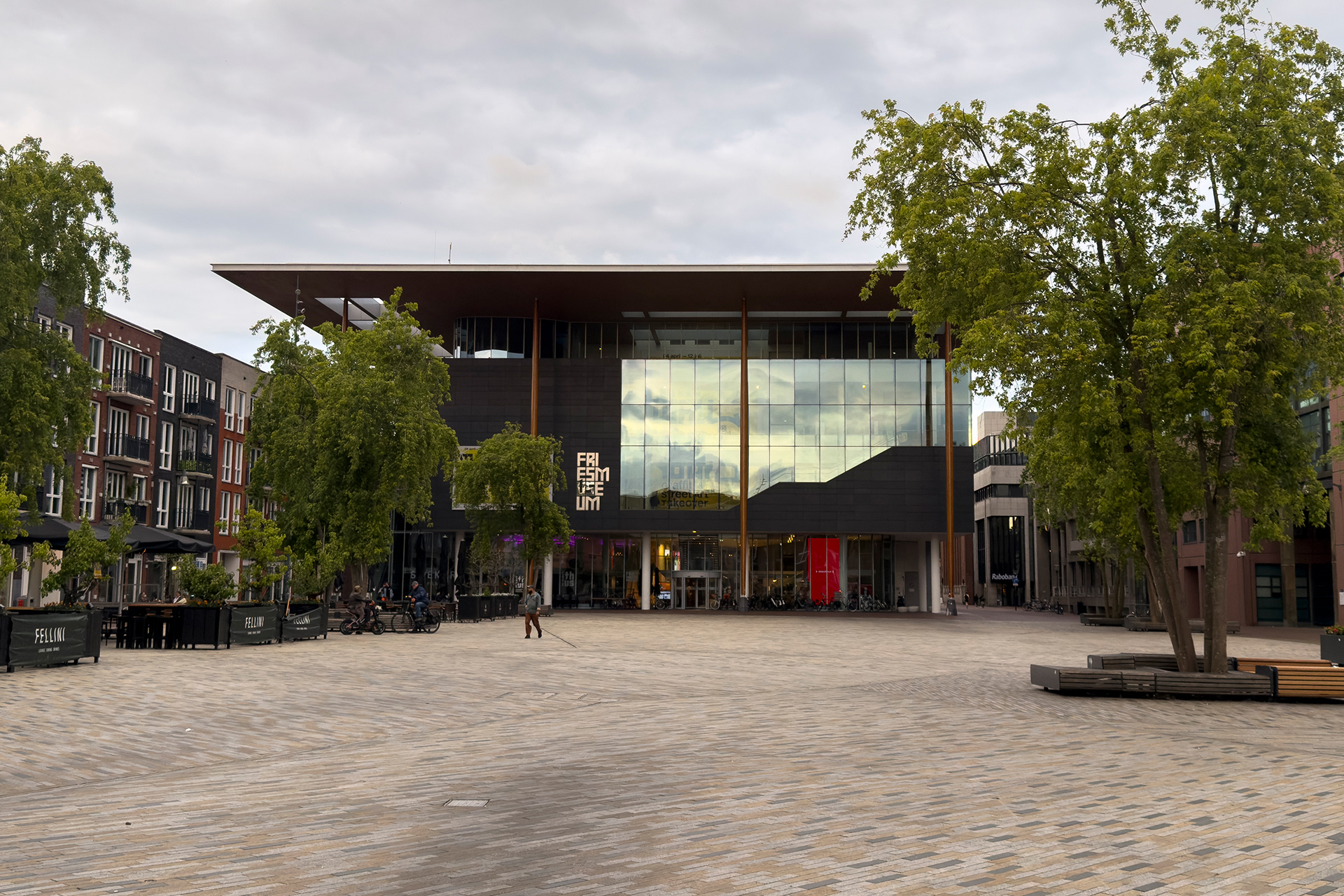
Fries Museum, Wilhelminaplein 92, Leeuwarden
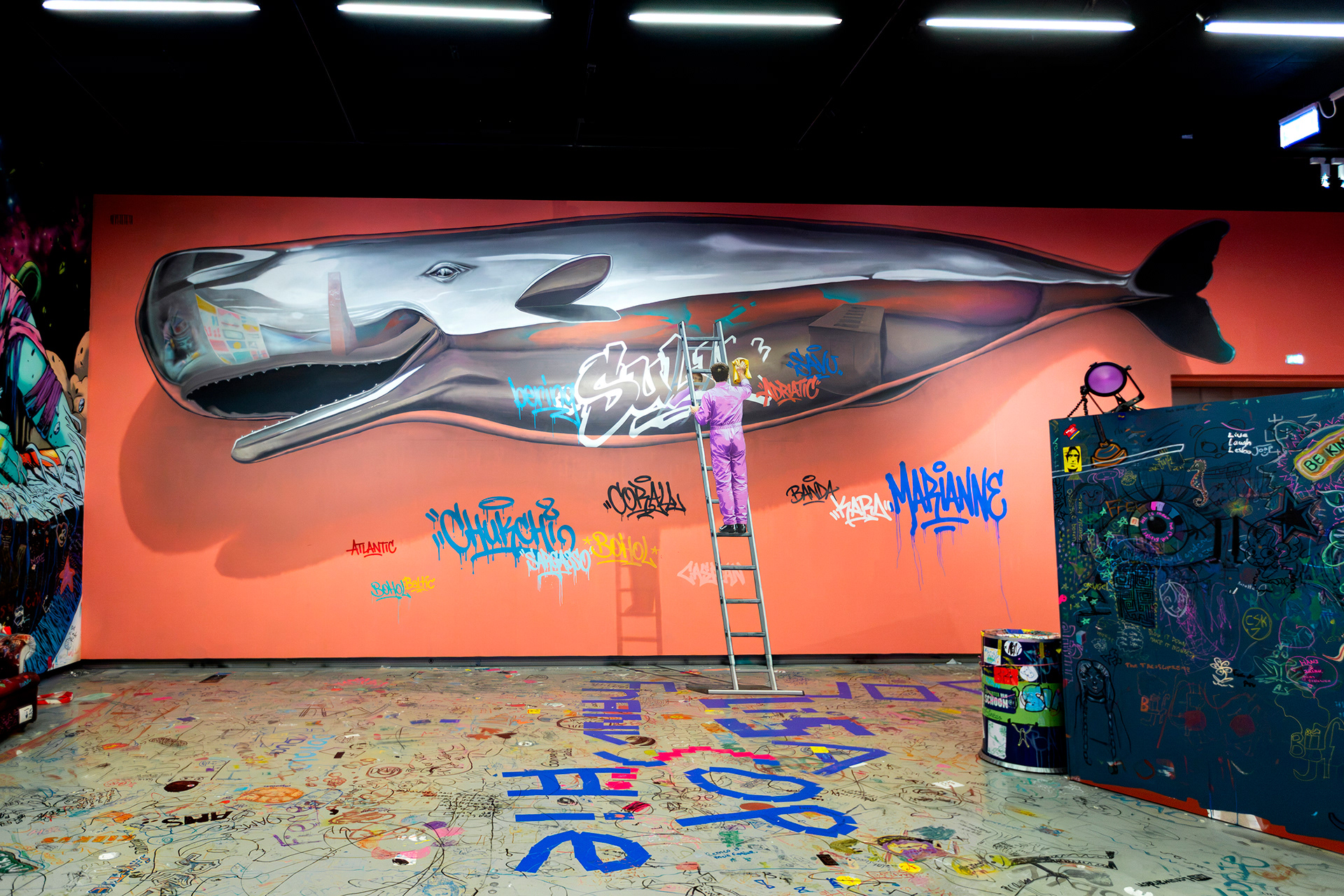
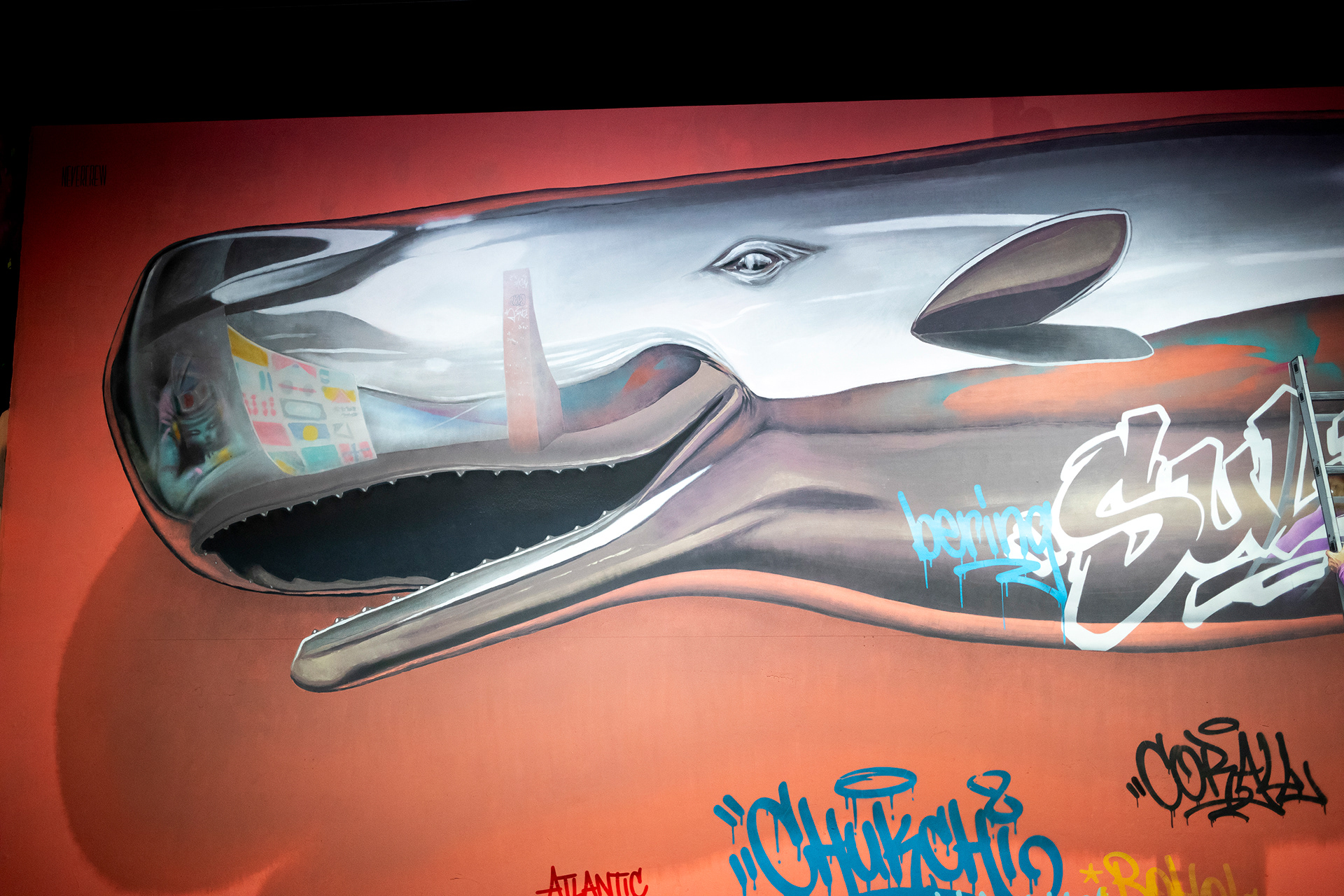
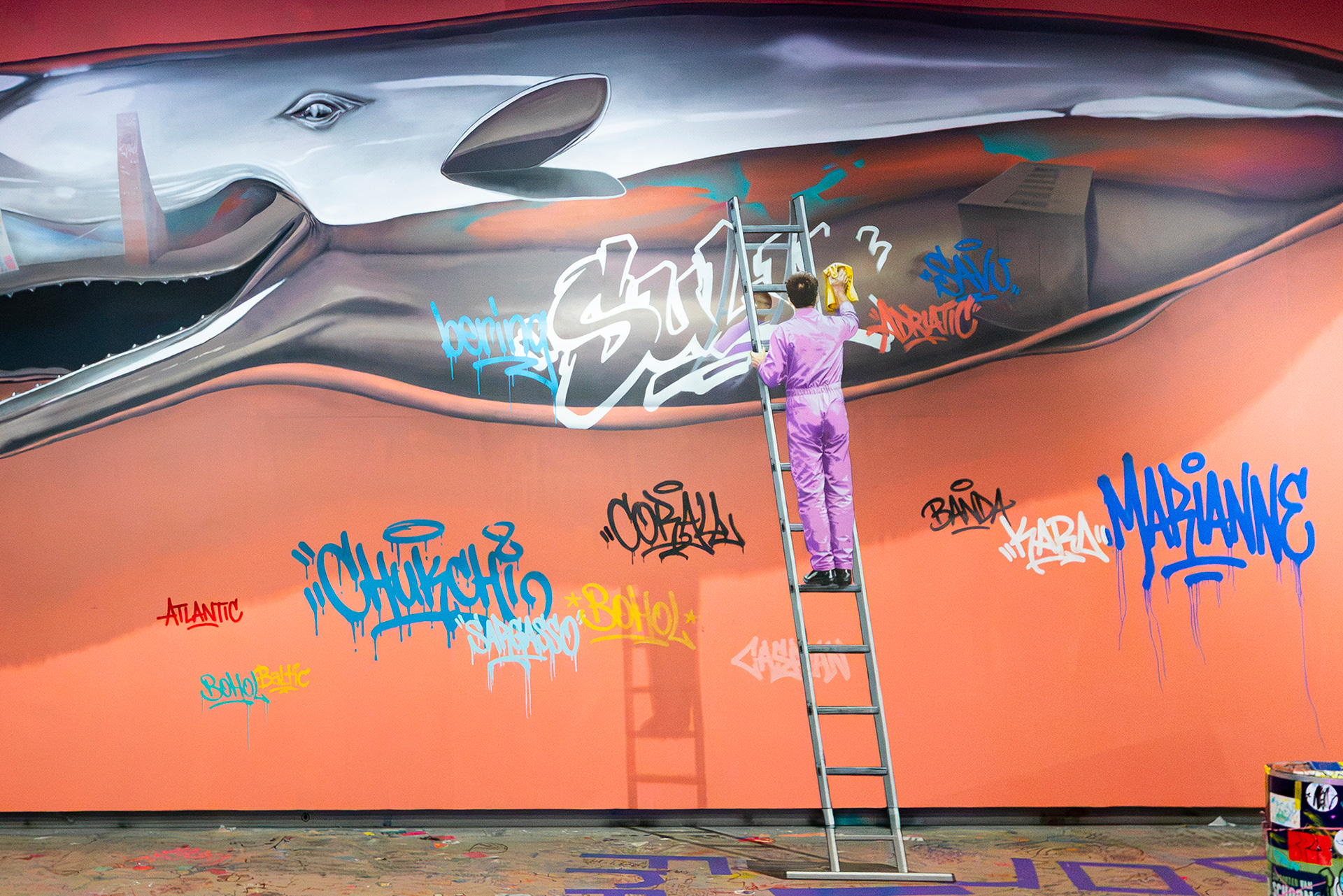
"Flow" shows a life-sized whale posizioned against the wall, like a sculpture in the museum. Its surface appears chromed and so like a mirror it reflects the surroundings, the structure of the room and the other artworks.
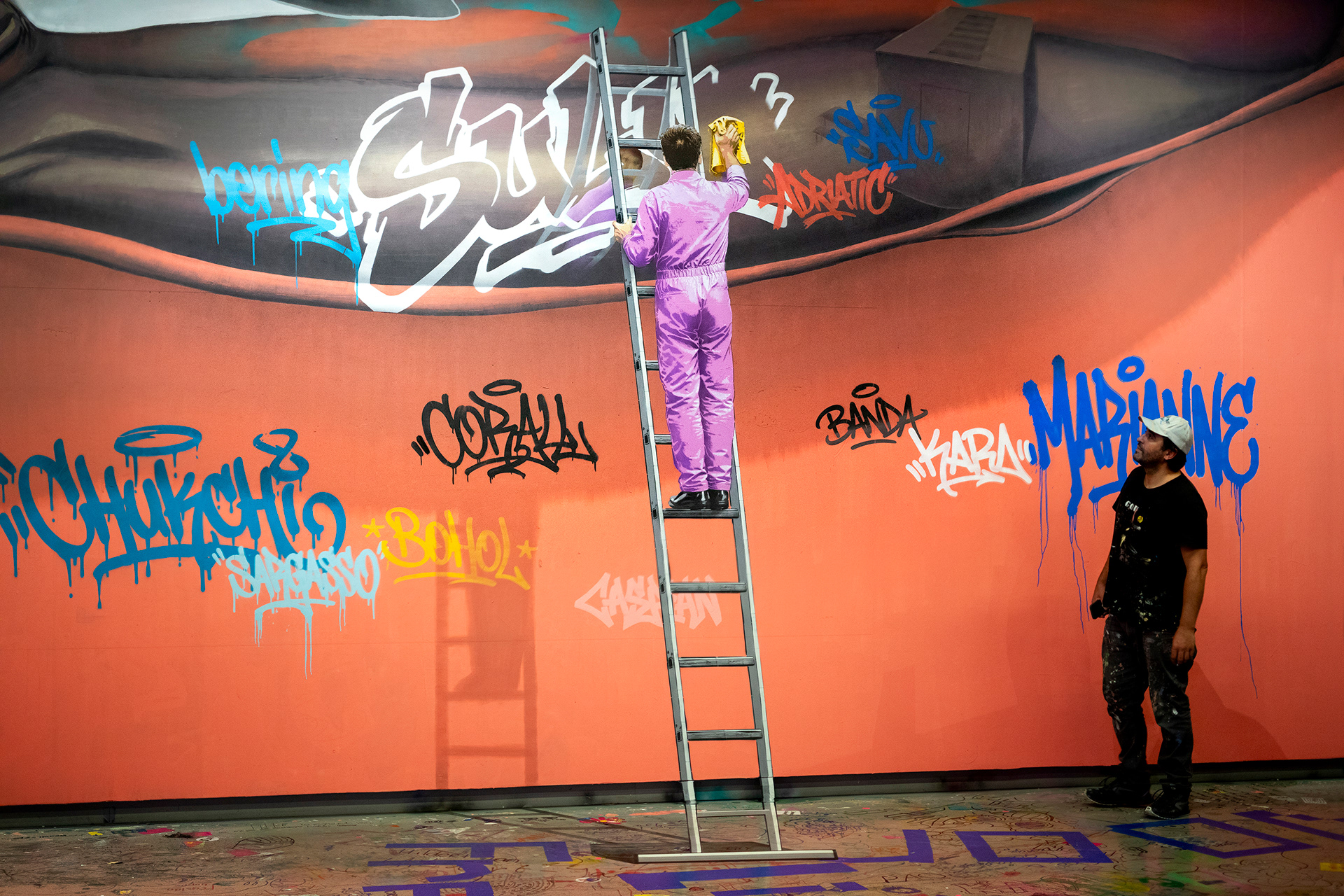
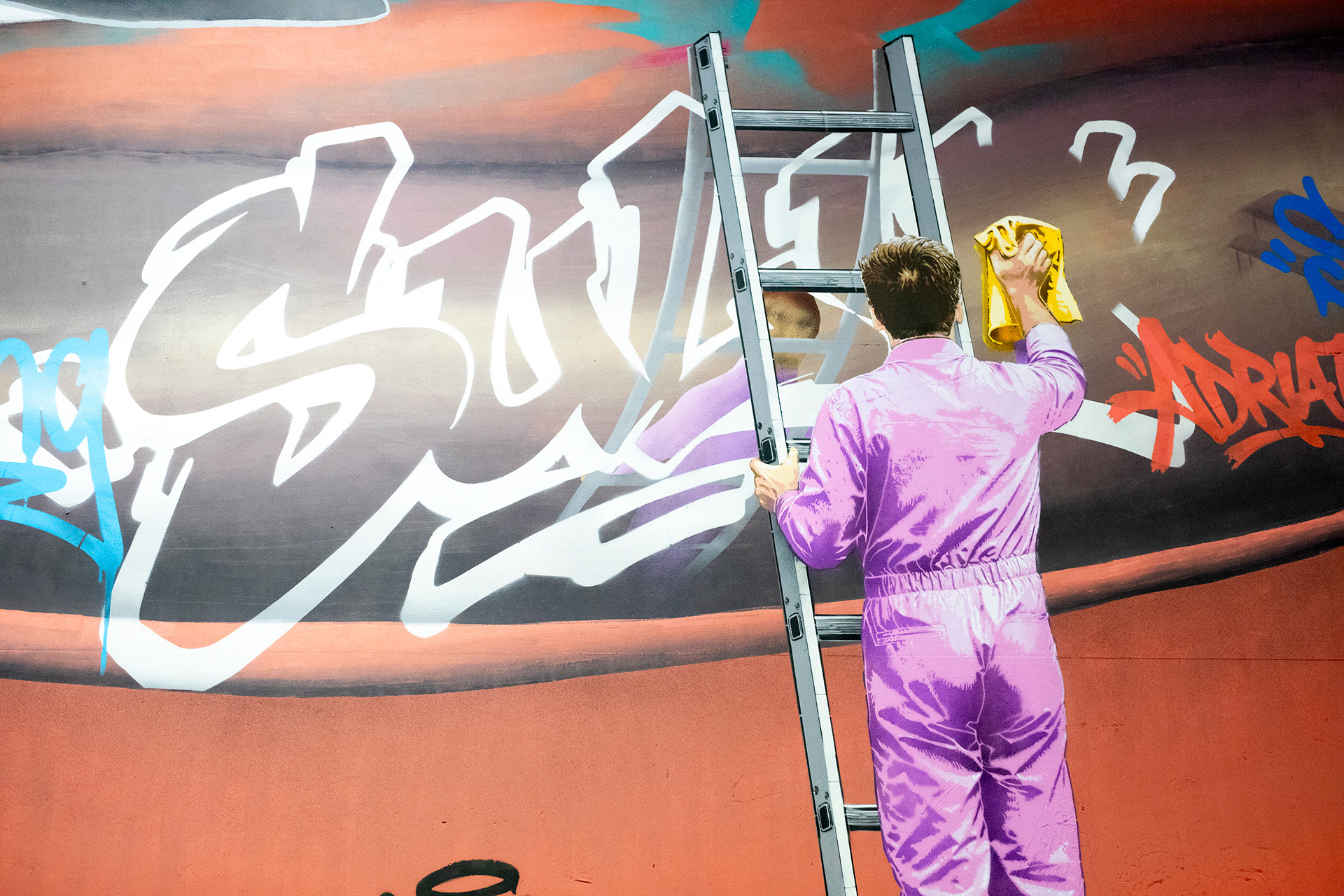
Following the idea behind the whole "The wall is yours" project and the fact that people are free to interact with everything in the room, "Flow" already shows an existing similar interaction: large tags have been drawn on the wall and on the whale itself, while a man on a ladder is trying to clean the whale; making the situation clear, using it and funnelling it into the concept.
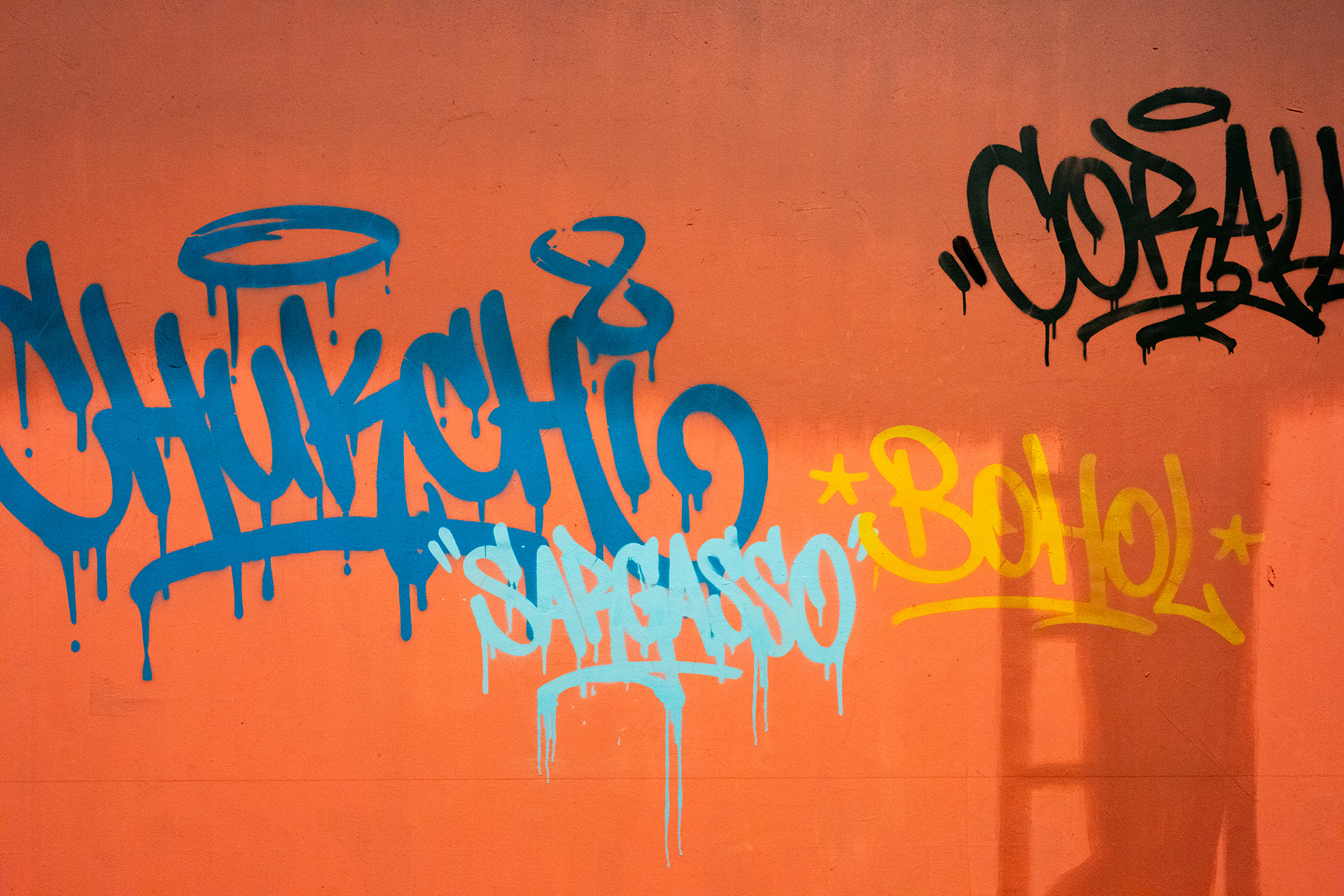
There are therefore different layers of communication. On one level, there's the theme of the interaction between humans and nature: humans dispose of nature, damage it, look at it without empathy, but also interact with, admire it it and try to protect it (the tags we painted all refer to the sea, mainly through names of seas and oceans). There's then the mirror, which is a way to say that the subject is there for real, but which becomes also a photograph, a memory of the moment when the whale was ideally placed there and that remains unaltered also if everything changes around it, highlightin this transformation.
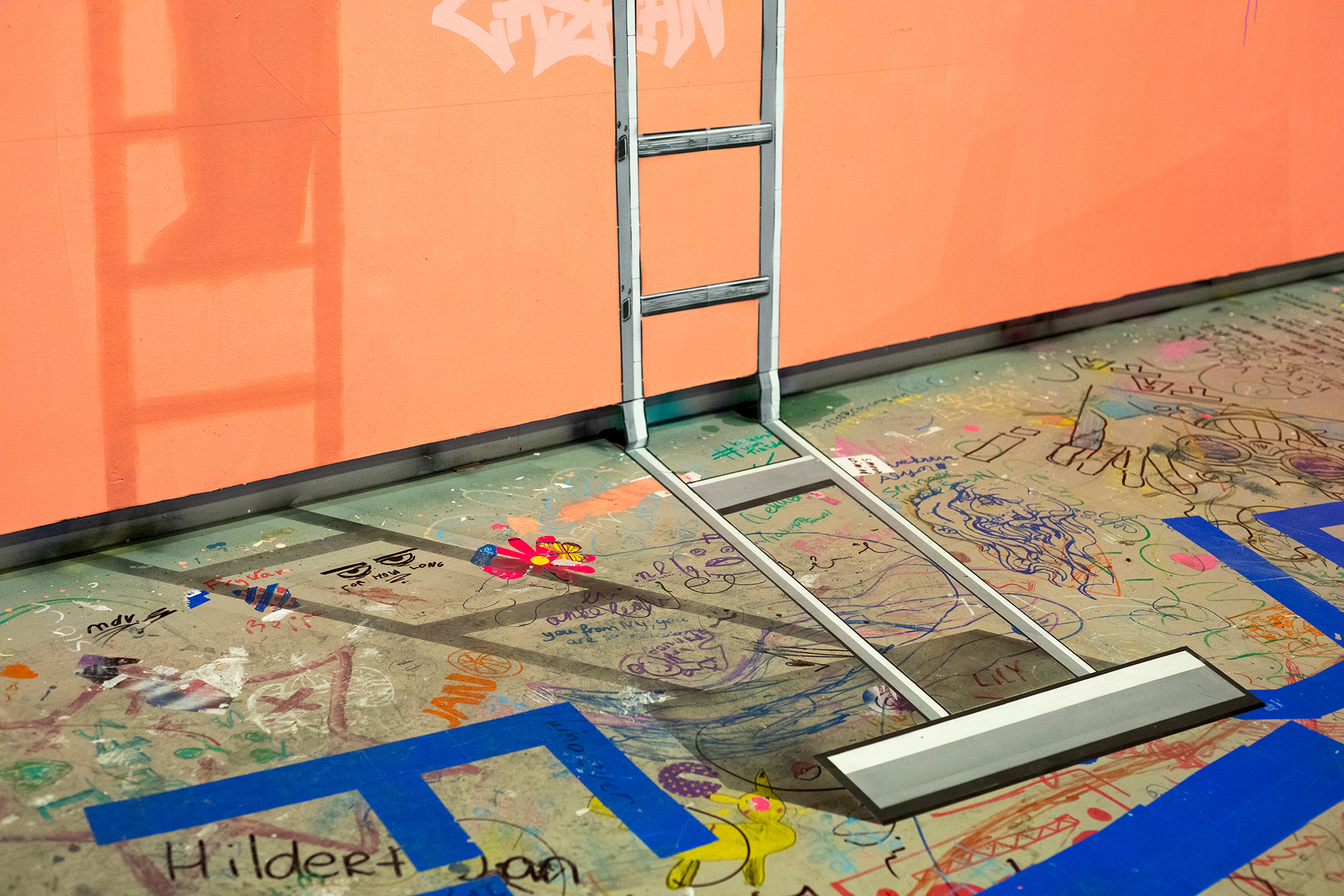
Finally there's the optical illusion, created through the overall mirror effect, the shadows and the details, but also through the anamorphic ladder, visible from a specific position. All these elements bring the composition into the actual space, in direct interaction with the people. In this way, the whale, the space, the context and the whole concept enter into direct communication with those who are there, looking or iteracting with the mural, using this specific interaction to emphasize the idea behind it.
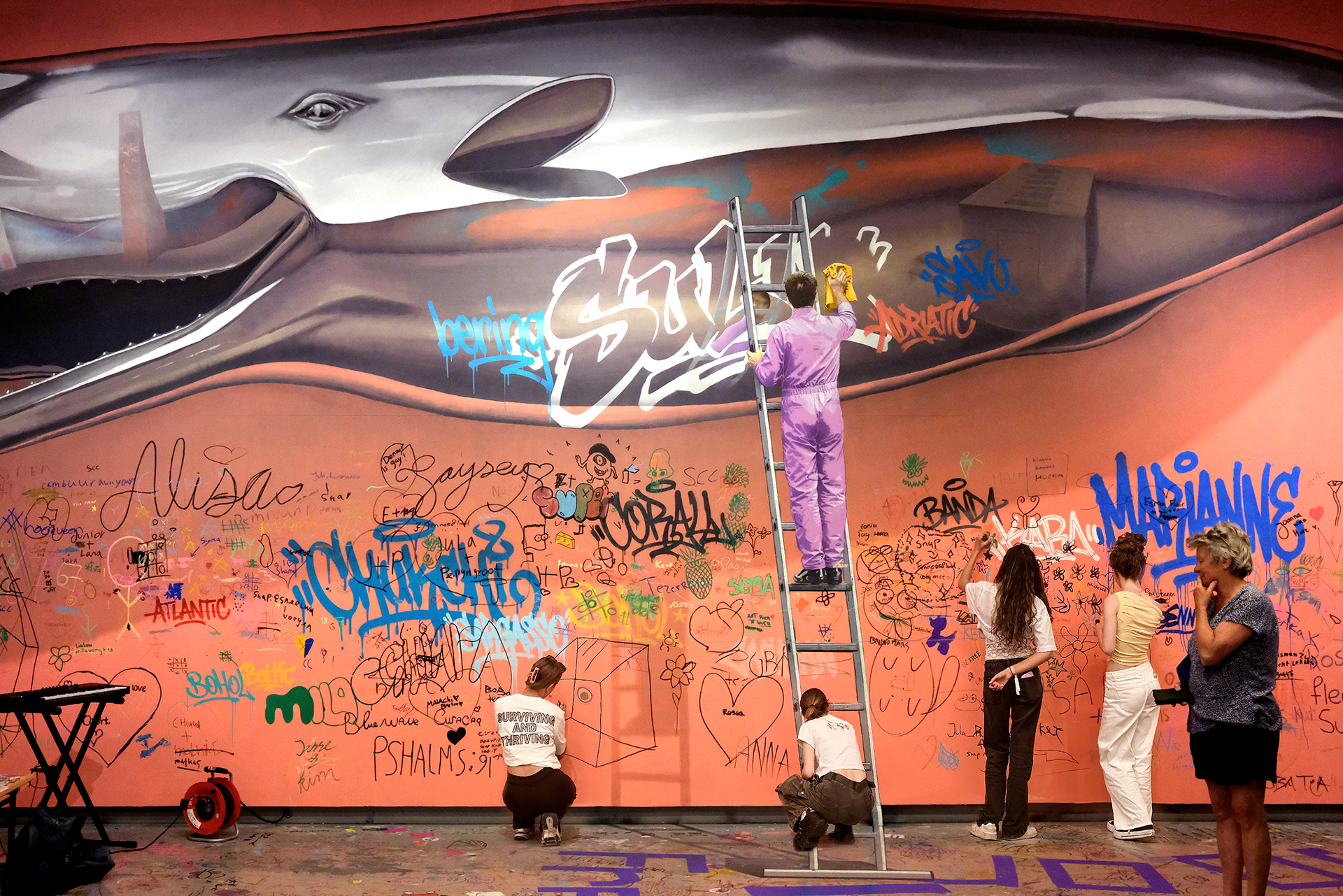
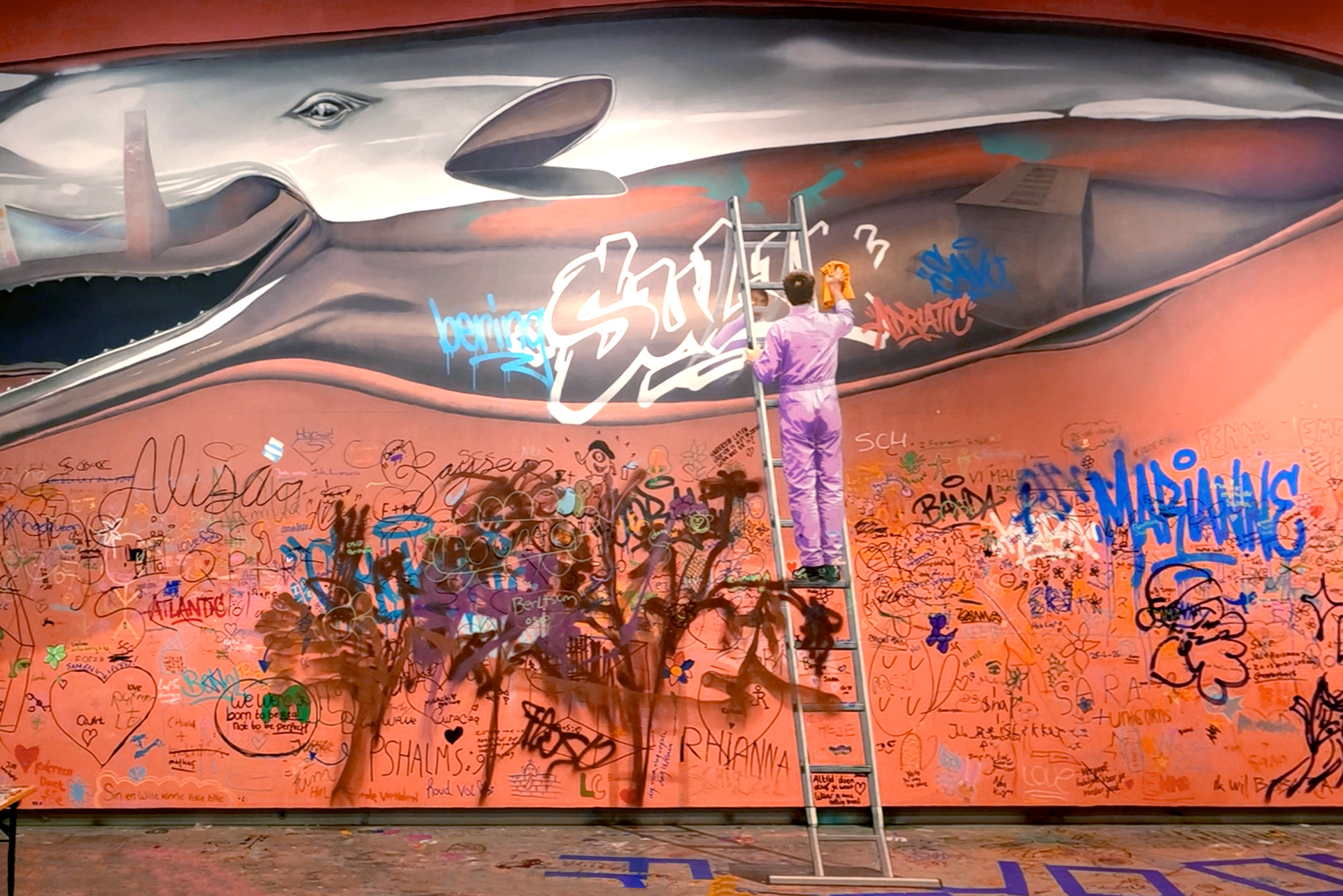
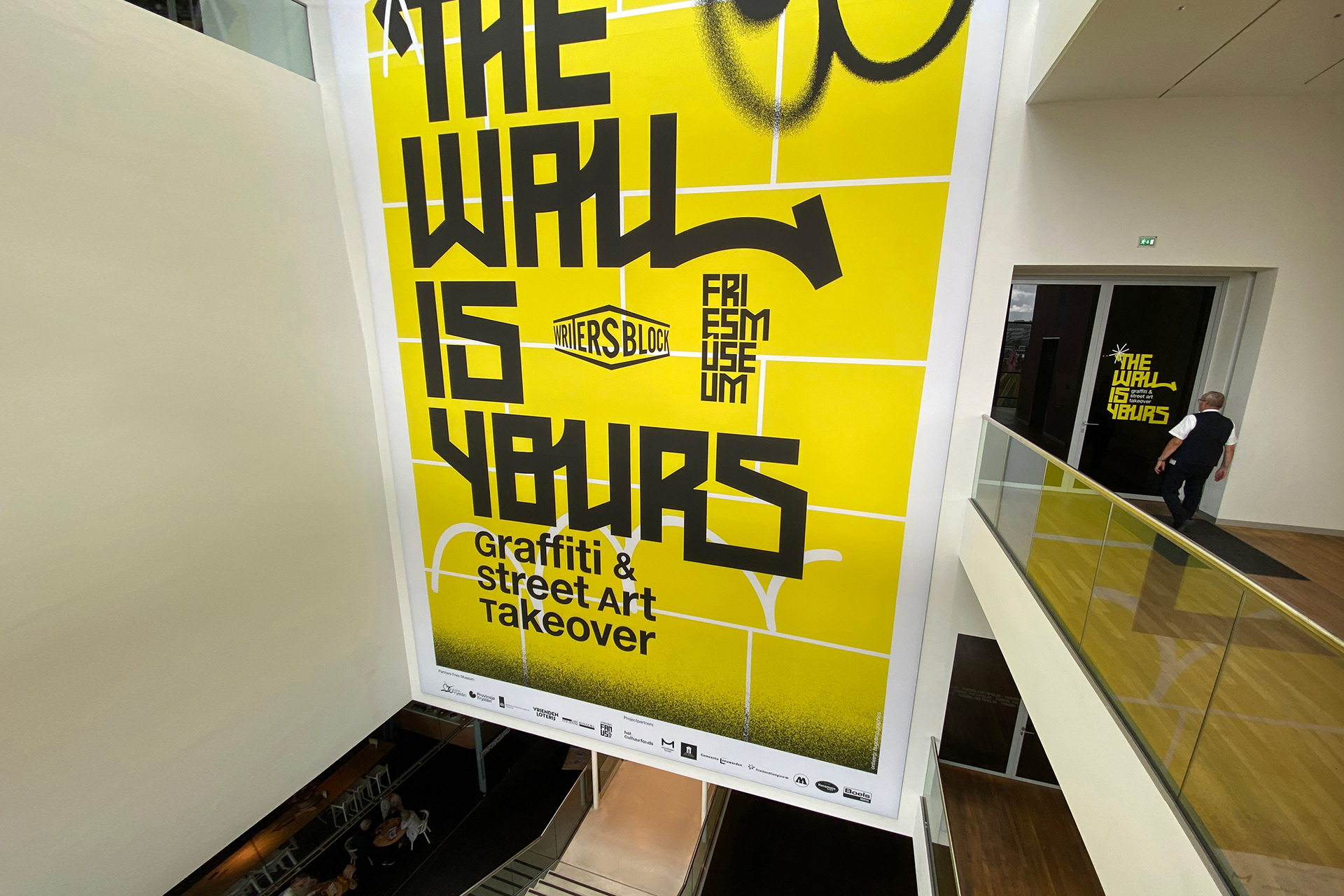
“Flow” is a temporary site-specific mural created by NEVERCREW at the Fries Museum in Leeuwarden, The Netherlands, in June 2026, as part of "The Wall is Yours: graffiti & street art takeover", a participatory exhibition conceived and organized by the Fries Museum in collaboration with Writer’s Block.
At the center of the work is a life-sized whale with a chrome-like, reflective surface, apparently occupying the physical space of the museum. Conceived in direct relation to the exhibition room, its architecture and its changing environment, “Flow” connects painted representation with real space, time and visitor interaction. Reflections, graffiti, shadows, changes of scale and anamorphosis are used to make the mural simultaneously appear as a physical presence and function as a record of a specific moment within the exhibition.
The illusion of reflection does not simply reproduce the appearance of a mirrored object. The whale’s painted surface incorporates a precise state of the Fries Museum room as it appeared when NEVERCREW created the mural, including architectural elements, surrounding artworks and marks already present on the walls. While the participatory exhibition was designed to continue changing through subsequent artistic and visitor interventions, these reflected elements remained fixed within the image.
The whale therefore establishes a shift between physical space, representation and time. The real exhibition room becomes a reflected space within its body, while that reflection gradually becomes the memory of an earlier condition of the room. What initially reinforces the optical illusion of a whale physically present inside the museum consequently also operates as a visual record of an environment that was designed to transform.
This temporal mechanism is directly connected to the participatory nature of "The Wall is Yours", in which visitors were invited to leave their own marks throughout the exhibition space. NEVERCREW anticipated this possibility by painting graffiti tags into the composition before potential future interventions occurred. Appearing both around and across the whale, the painted tags contain words associated with seas, oceans and the marine environment, placing the visual language of graffiti in direct dialogue with the natural subject of the work.
These artificial traces simulate an interaction that, at the moment of their creation, had not yet taken place. At the same time, the whale is positioned beyond the visitors’ physical reach, while a small painted human figure stands on a ladder attempting to clean its surface. An anticipated act of modification is therefore immediately accompanied by an act of removal. Intervention, appropriation, care, preservation and transformation are presented not as opposing conditions, but as interconnected stages within the same process.
These artificial traces simulate an interaction that, at the moment of their creation, had not yet taken place. At the same time, the whale is positioned beyond the visitors’ physical reach, while a small painted human figure stands on a ladder attempting to clean its surface. An anticipated act of modification is therefore immediately accompanied by an act of removal. Intervention, appropriation, care, preservation and transformation are presented not as opposing conditions, but as interconnected stages within the same process.
Through this relationship, “Flow” also continues NEVERCREW’s investigation into the connections between human beings, nature and the systems through which reality is perceived, represented and altered. The whale can be observed, marked, transformed, protected or restored, while human actions affect both its apparent condition and the way in which it is perceived. Nature and human activity are therefore not represented as separate elements, but placed within the same interconnected and continuously evolving system.
The integration between image and architecture is reinforced through painted shadows, reflective surfaces, shifts in scale and optical illusion. The ladder is constructed using anamorphosis: its distorted geometry aligns correctly only when viewed from a precise position inside the Fries Museum exhibition room. The viewer’s physical location consequently becomes part of the work. Moving through the space changes the relationship between its painted and real elements, while reaching the intended viewpoint temporarily brings image, architecture and observer into alignment.
The integration between image and architecture is reinforced through painted shadows, reflective surfaces, shifts in scale and optical illusion. The ladder is constructed using anamorphosis: its distorted geometry aligns correctly only when viewed from a precise position inside the Fries Museum exhibition room. The viewer’s physical location consequently becomes part of the work. Moving through the space changes the relationship between its painted and real elements, while reaching the intended viewpoint temporarily brings image, architecture and observer into alignment.
The title “Flow” refers to this continuous progression between different states and relationships: physical space becomes reflected space; reflection becomes memory; memory remains fixed within an environment conceived to change; possible future intervention is anticipated through painted graffiti; modification is accompanied by an attempt at erasure; and the surrounding exhibition continues its transformation.
Through this movement, the temporary mural operates simultaneously as an image, an apparent sculptural presence, a visual archive of the exhibition space and an active element within it. Whale, architecture, graffiti, viewer and surrounding artworks become part of a single evolving situation in which representation and physical reality, memory and transformation, nature and human interaction continuously overlap.