Parc des Chaumettes, Bd de la Cluse 89
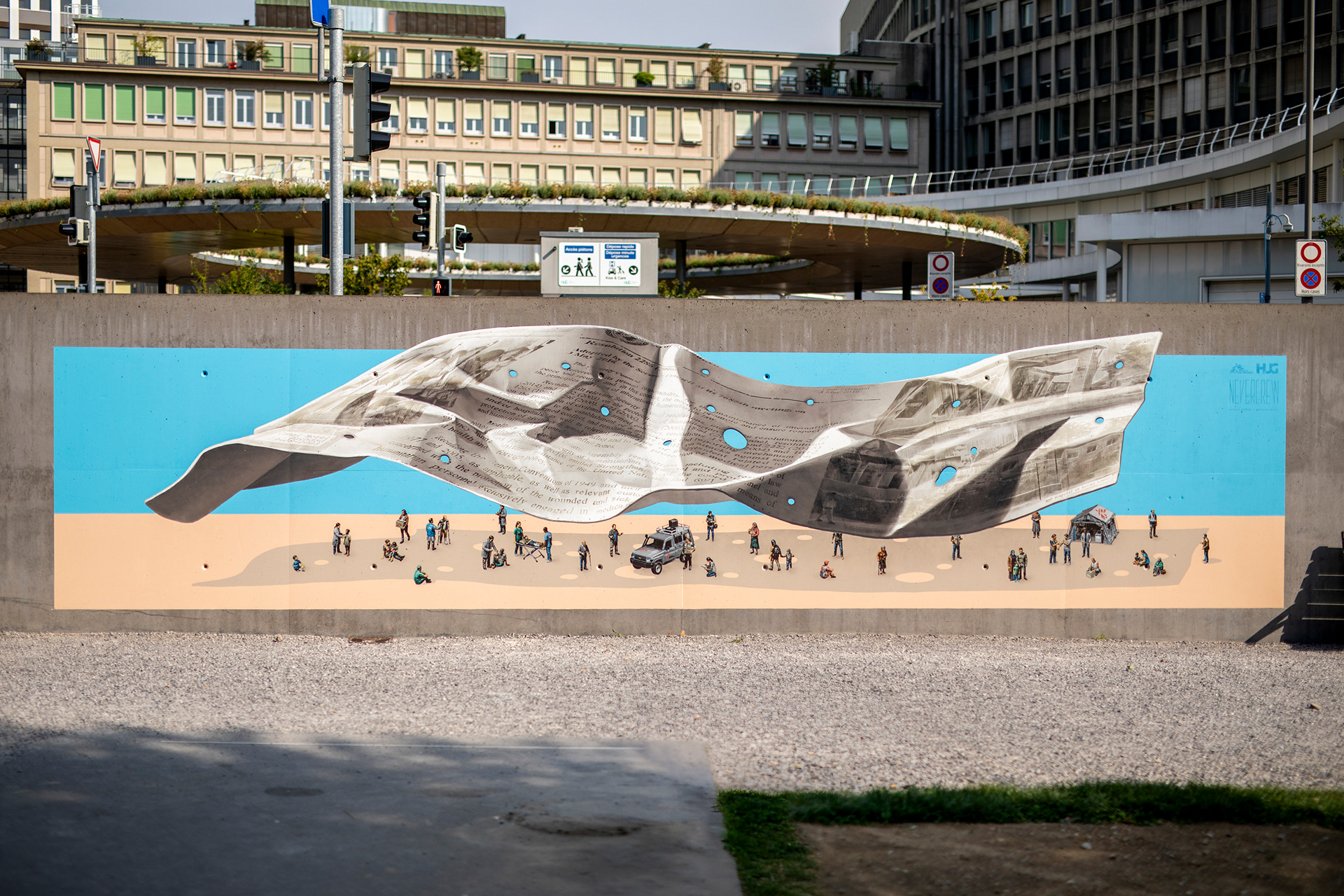
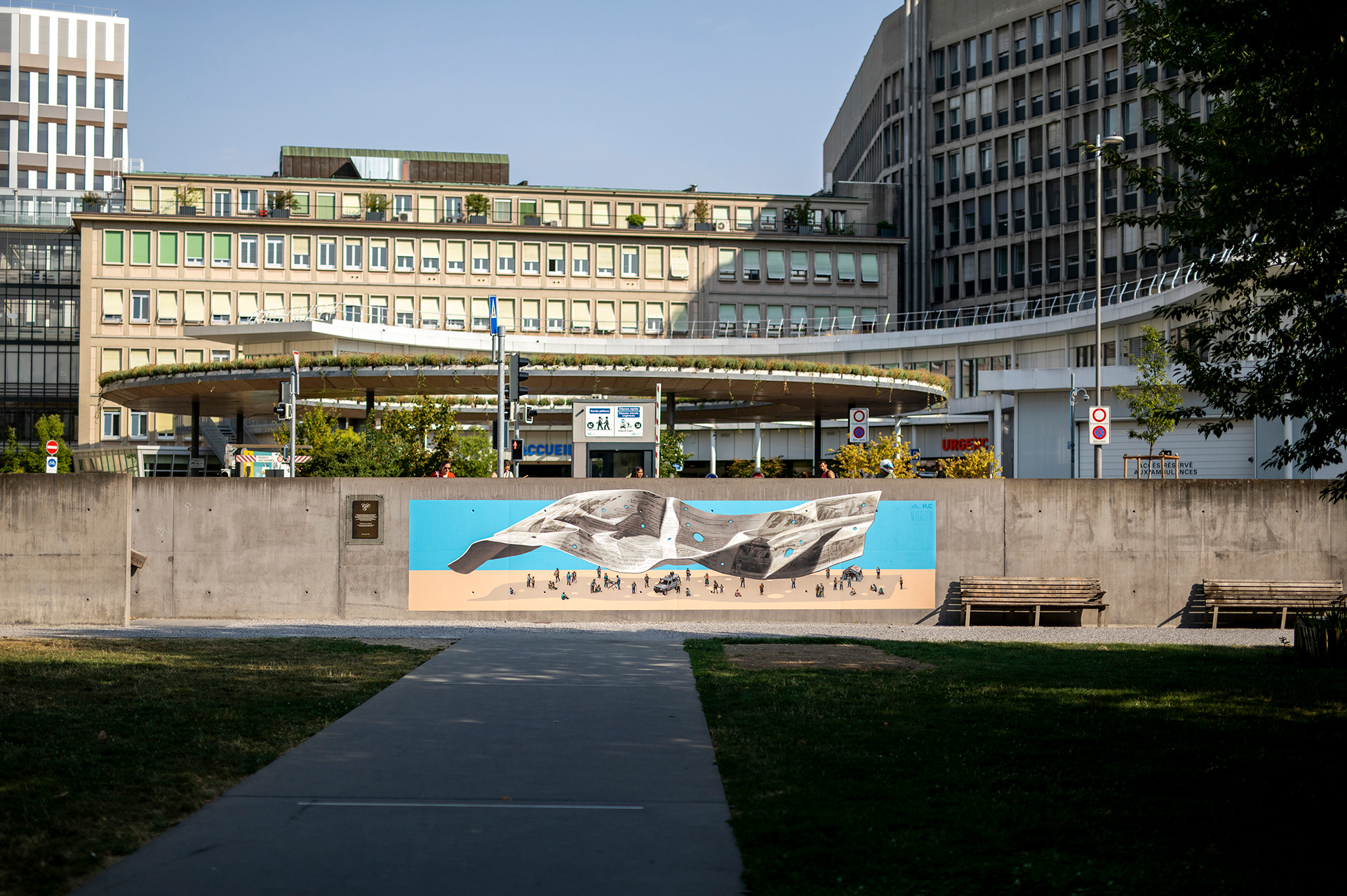
Created in Geneva for Médecins Sans Frontières and Hôpitaux Universitaires de Genève, the mural marks ten years since UN Security Council Resolution 2286, addressing the protection of civilians, medical and humanitarian personnel and facilities in armed conflict.
A damaged sheet of paper hovers above those who care for others, becoming at once document, shelter and fragile boundary. What is meant to protect appears vulnerable itself, pierced by the same violence it is supposed to prevent. Between responsibility and powerlessness, protection and exposure, the work reflects on the distance between principles and their application, while memory remains as a trace, a witness and a possible form of resistance. Beneath this precarious cover, individual actions become part of a shared condition: a reminder that care, protection and responsibility can only exist as collective commitments.
A damaged sheet of paper hovers above those who care for others, becoming at once document, shelter and fragile boundary. What is meant to protect appears vulnerable itself, pierced by the same violence it is supposed to prevent. Between responsibility and powerlessness, protection and exposure, the work reflects on the distance between principles and their application, while memory remains as a trace, a witness and a possible form of resistance. Beneath this precarious cover, individual actions become part of a shared condition: a reminder that care, protection and responsibility can only exist as collective commitments.
In May 2016, the United Nations Security Council adopted Resolution 2286, condemning attacks against medical personnel and healthcare facilities in armed conflicts and calling for greater protection and more effective accountability. Ten years later, Médecins Sans Frontières (MSF), the World Health Organization (WHO) and the International Committee of the Red Cross (ICRC) jointly stated that the situation is even worse than it was in 2016. In its January 2026 report Medical Care in the Crosshairs, MSF notes that attacks against medical care and humanitarian action have increased significantly, particularly since 2021. MSF bases this assessment not only on its own experience, but also on several datasets and monitoring systems, including those of the WHO, the Safeguarding Health in Conflict Coalition (SHCC), Insecurity Insight and the Aid Worker Security Database (AWSD).
The impact on humanitarian workers is particularly severe. Using the AWSD data available at the time the report was published, MSF reported that between 2021 and 2025, 1,241 national humanitarian staff and 29 international staff were killed. This means that around 98% of the humanitarian workers killed were national staff. MSF also highlighted that the number of humanitarian workers killed in both 2024 and 2025 was more than twice the average recorded between 2018 and 2022. As the AWSD is a continuously updated database, some of these figures have since been revised, but the overall trend identified by MSF remains unchanged.
Data specifically concerning healthcare workers and facilities also show a sharp intensification of violence. Insecurity Insight, based on incidents documented between January 2016 and December 2025 and also used in SHCC reports, recorded more than 17,000 incidents involving attacks, violence or interference affecting healthcare, as well as more than 3,600 healthcare workers killed during the decade following the adoption of Resolution 2286. These figures concern healthcare workers and should not be directly added to the AWSD figures for humanitarian workers, since the two categories and their data-collection methodologies are different and may partly overlap. In 2025 alone, the United Nations also reported more than 1,350 attacks against healthcare workers and facilities across 18 conflicts. On the tenth anniversary of the resolution, MSF, the WHO and the ICRC therefore concluded that the situation is worse than it was ten years earlier: the violence that Resolution 2286 was intended to help prevent has continued and, in many conflicts, intensified.
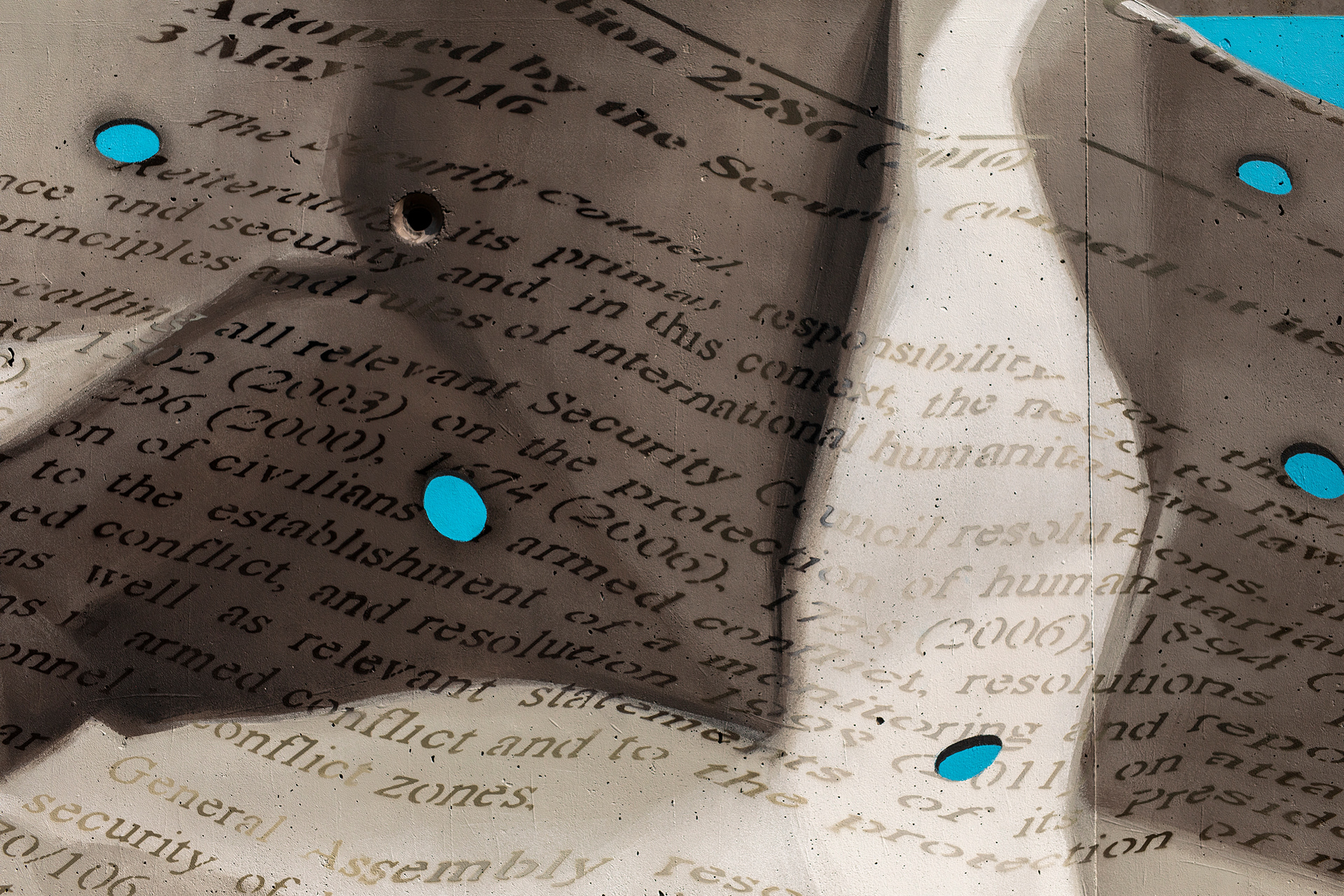
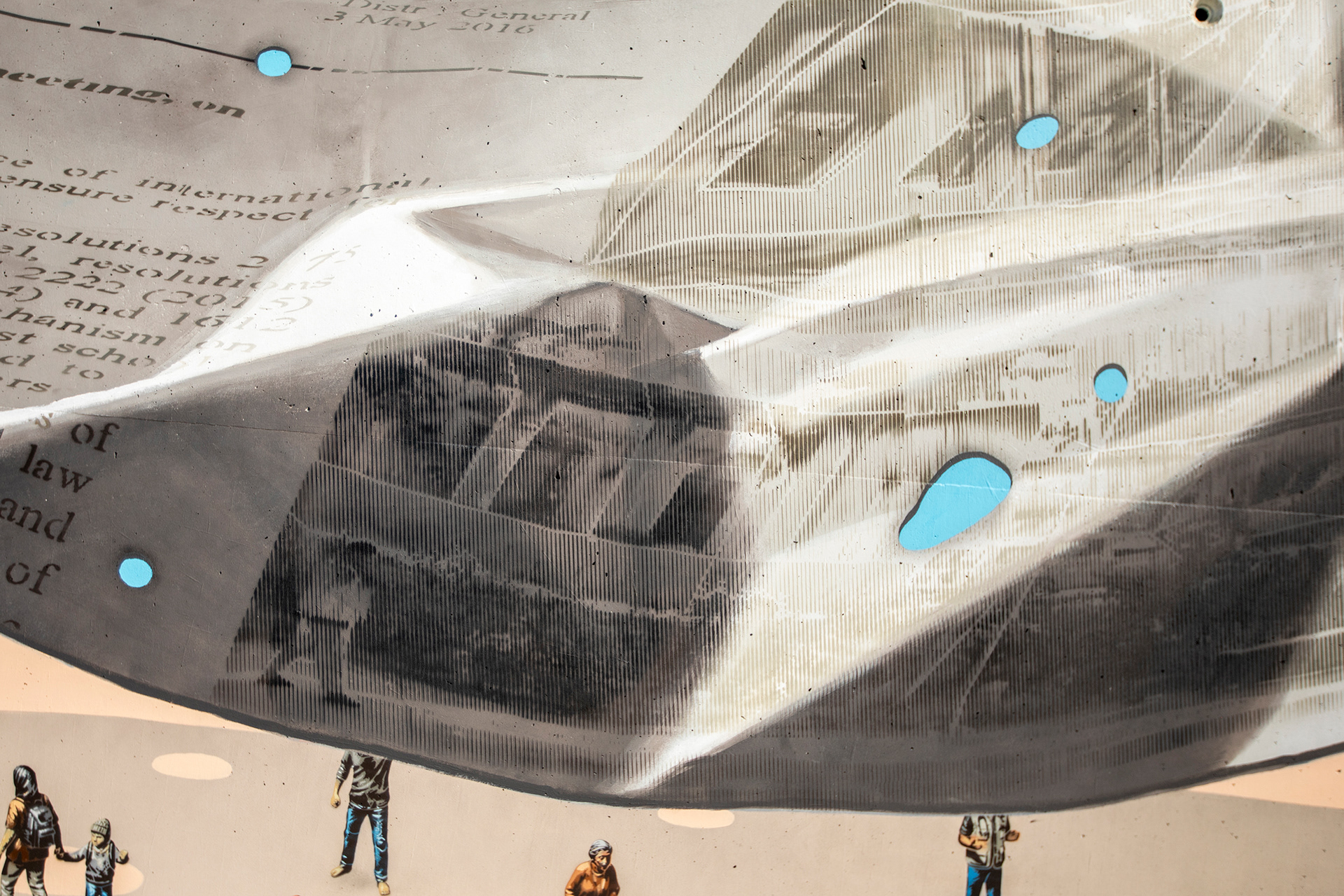
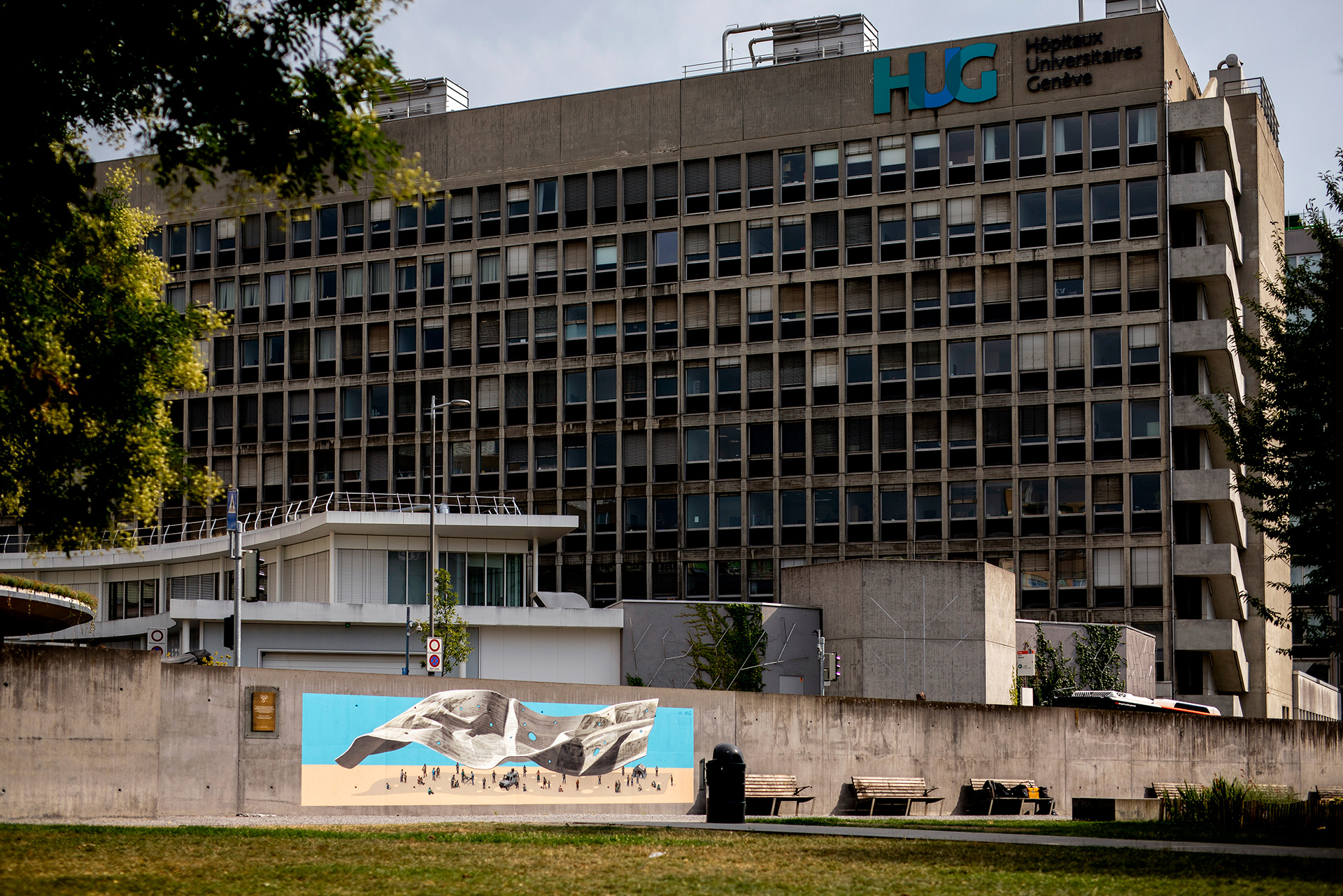
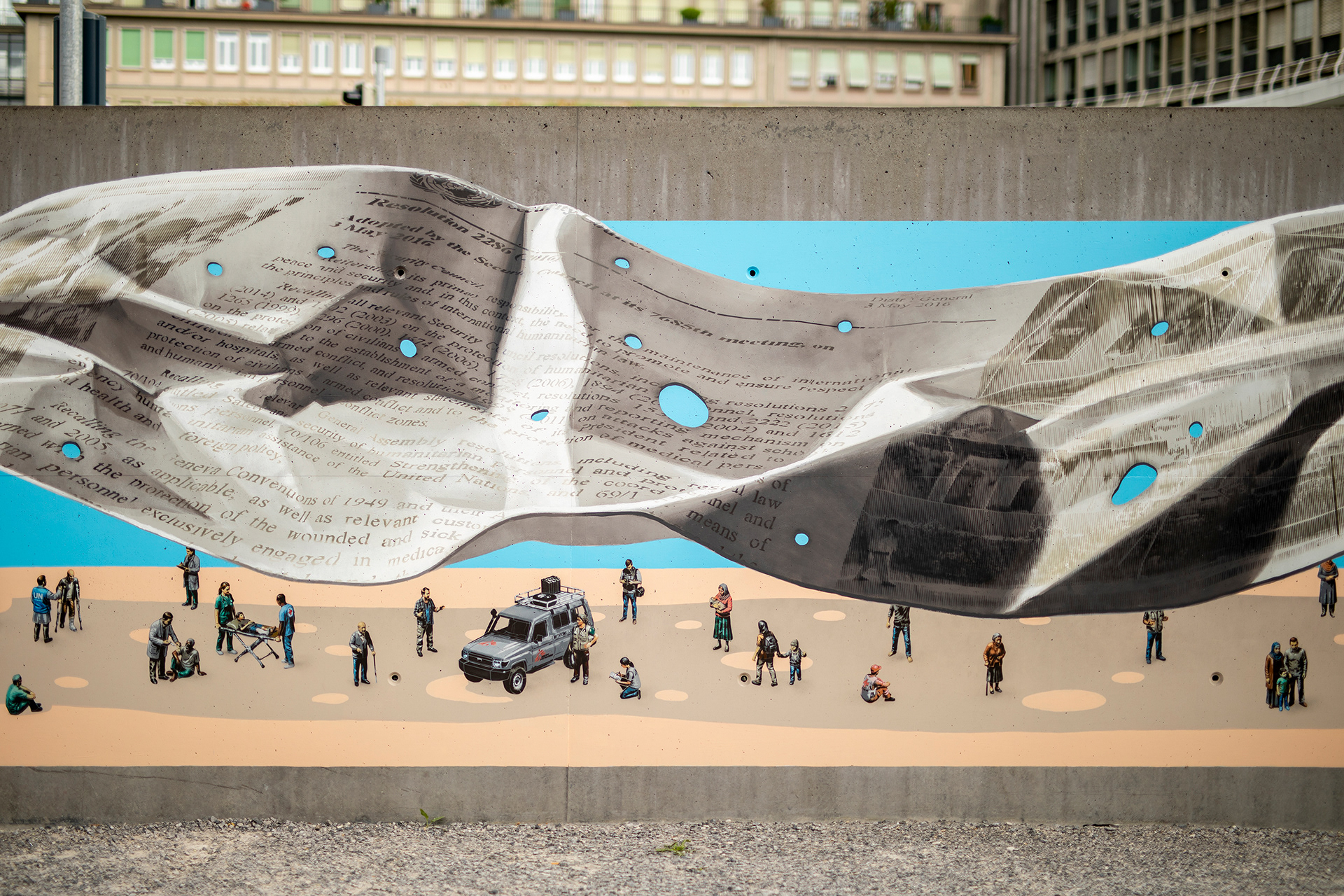
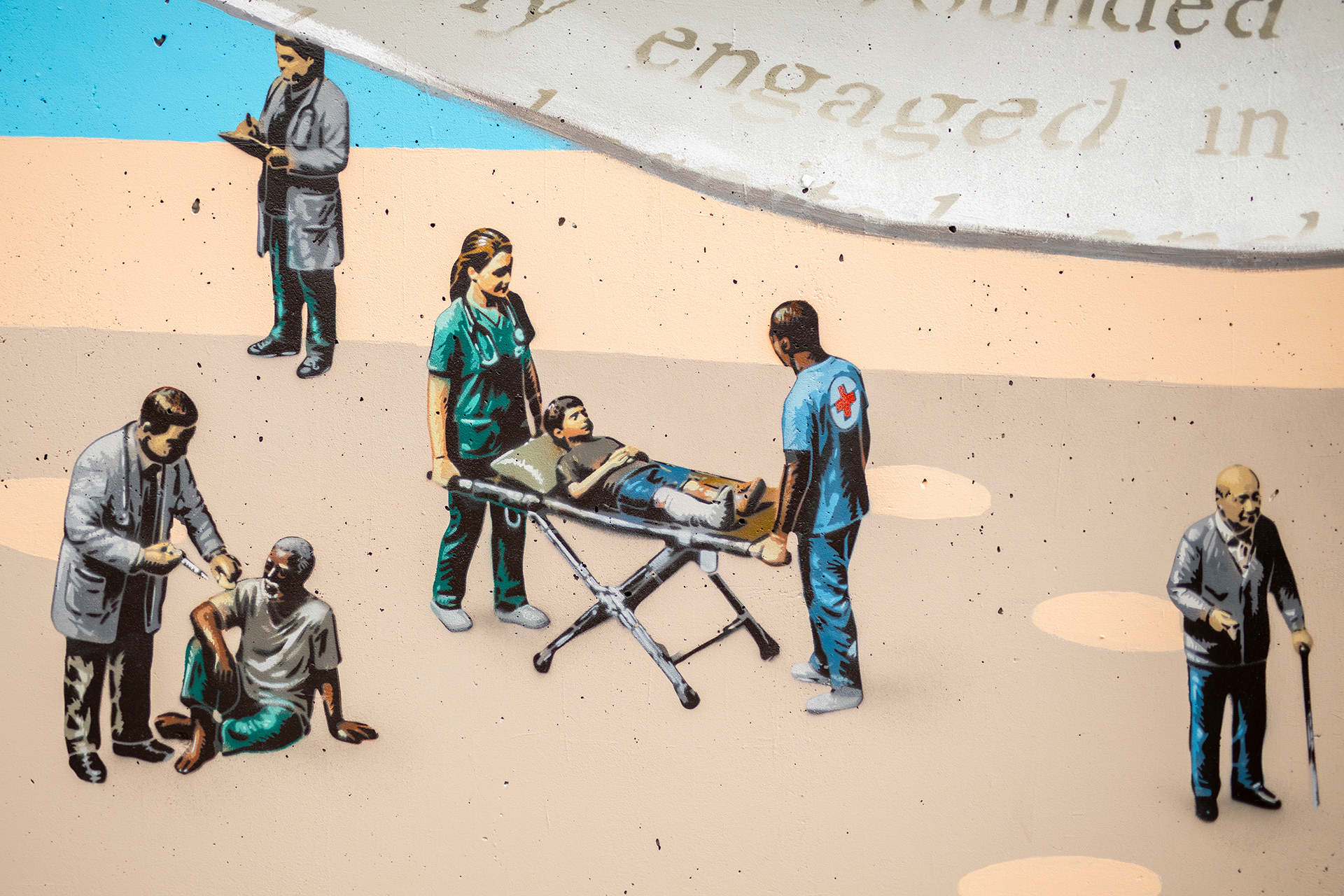
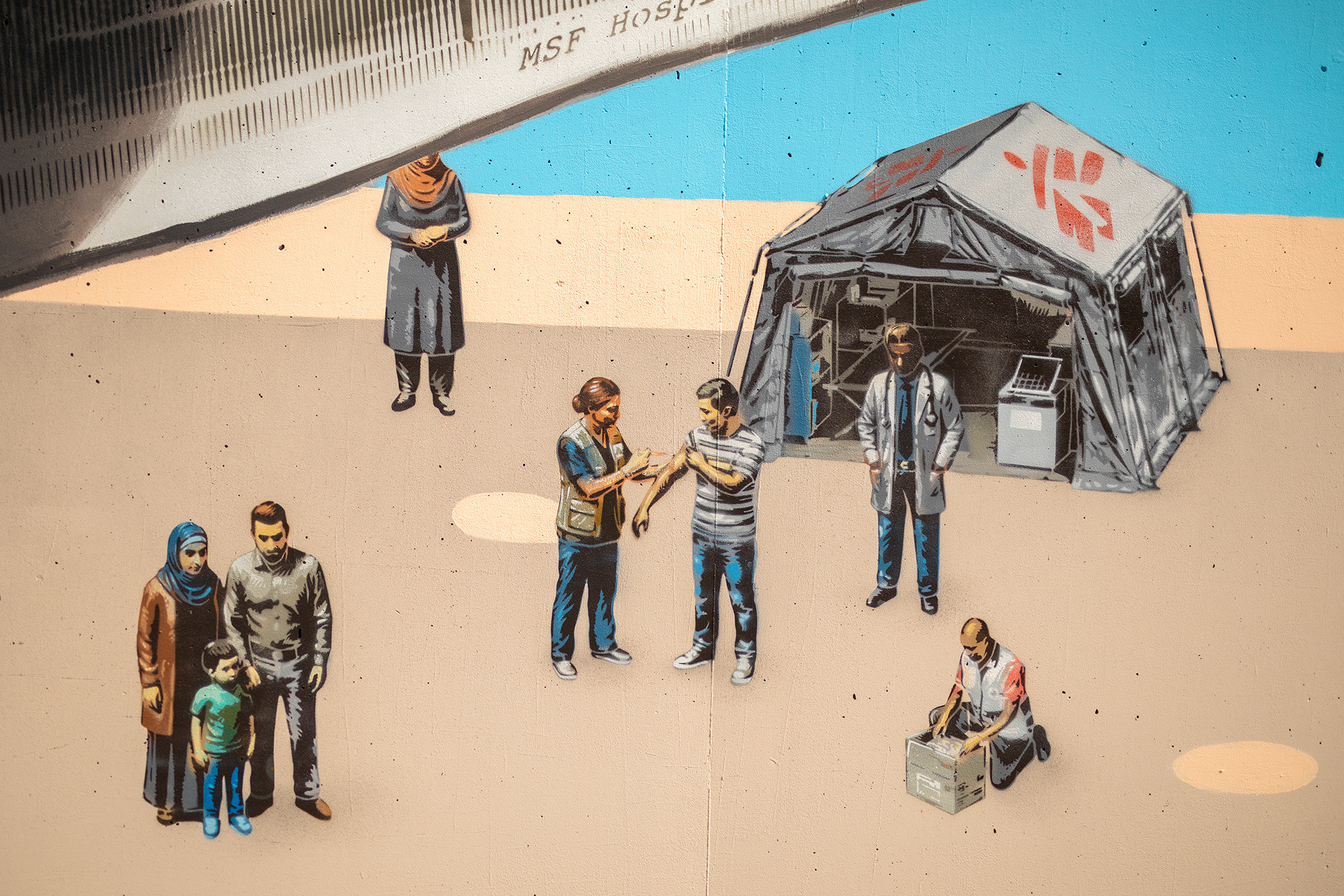
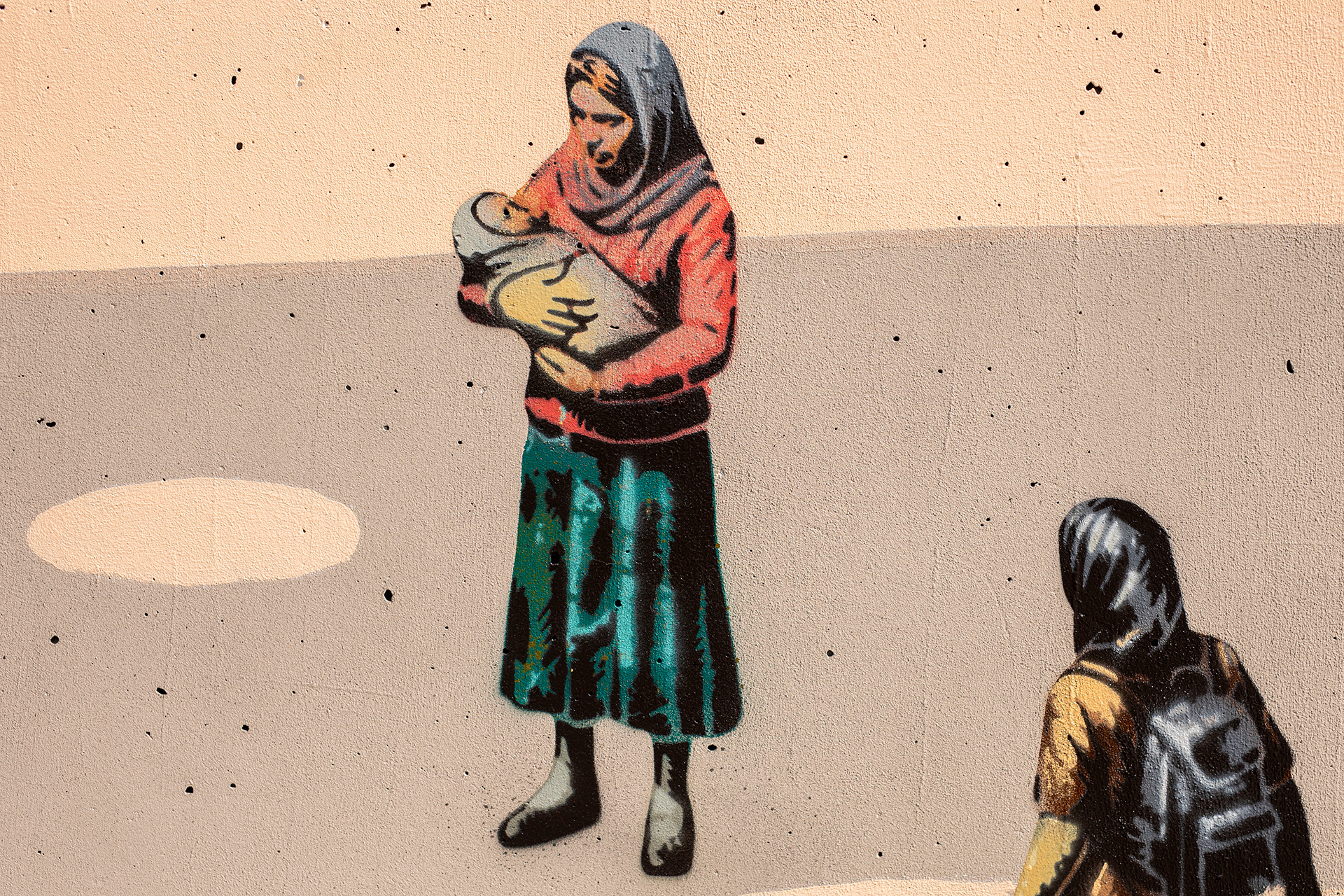
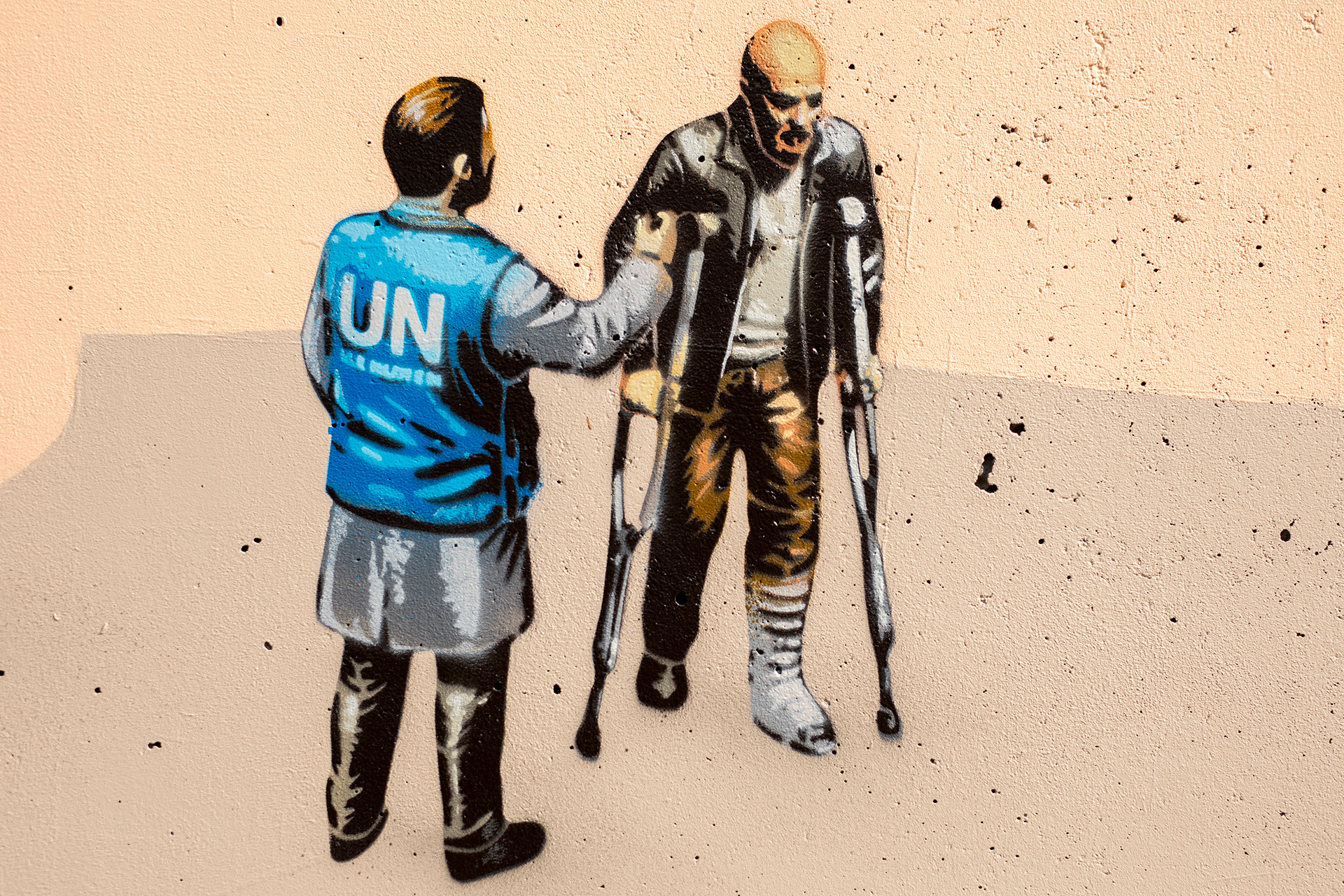
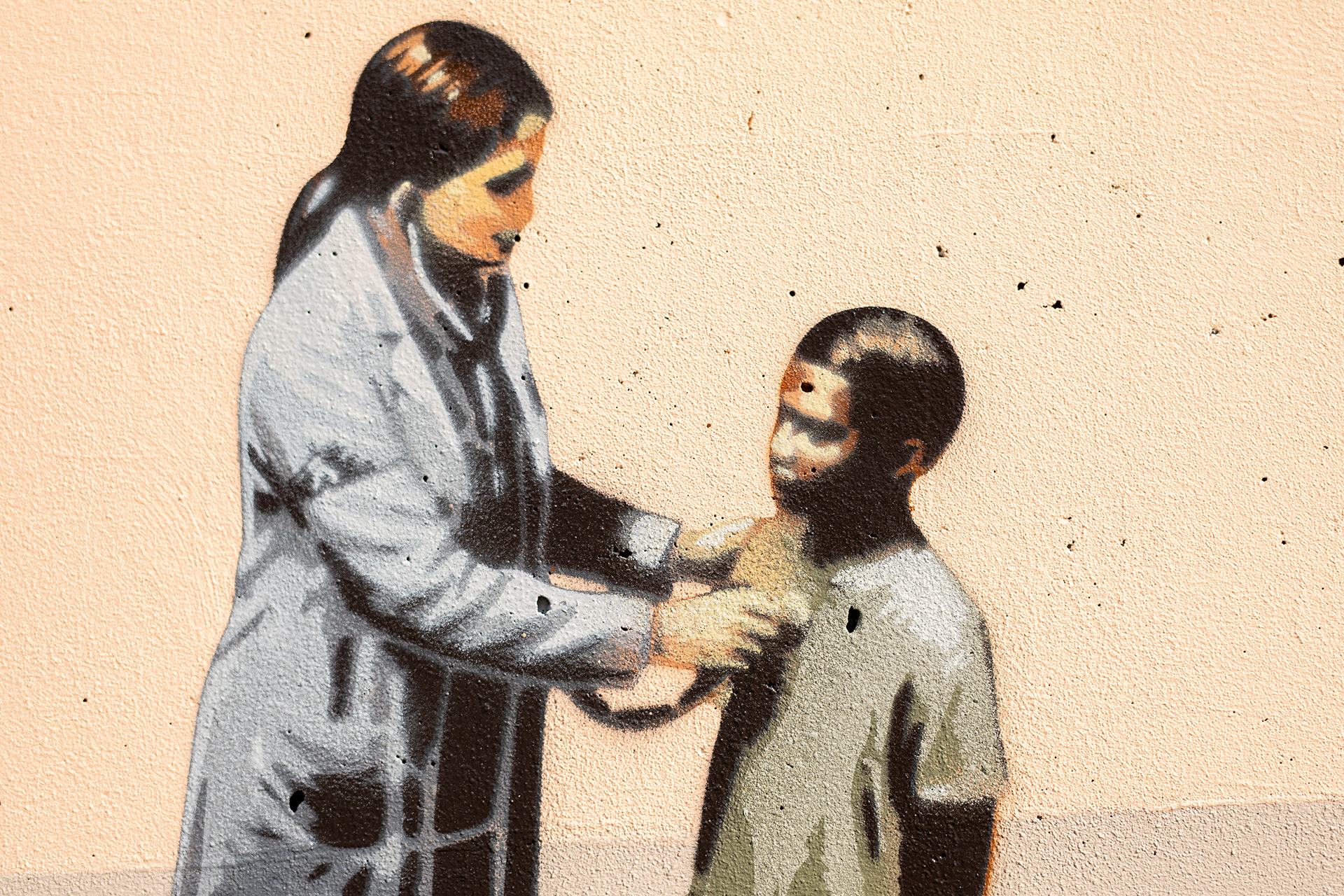
The mural depicts a large, crumpled and pierced sheet of paper suspended above a group of medical workers, humanitarian personnel and civilians in a symbolic conflict-zone landscape. The paper acts as a fragile roof or protective shelter and incorporates text from UN Security Council Resolution 2286 together with photographic references to attacks on healthcare facilities, as the bombing of the Kurduz MSF Hospital in 2015 and of the Canal Hotel in Baghdad in 2003.
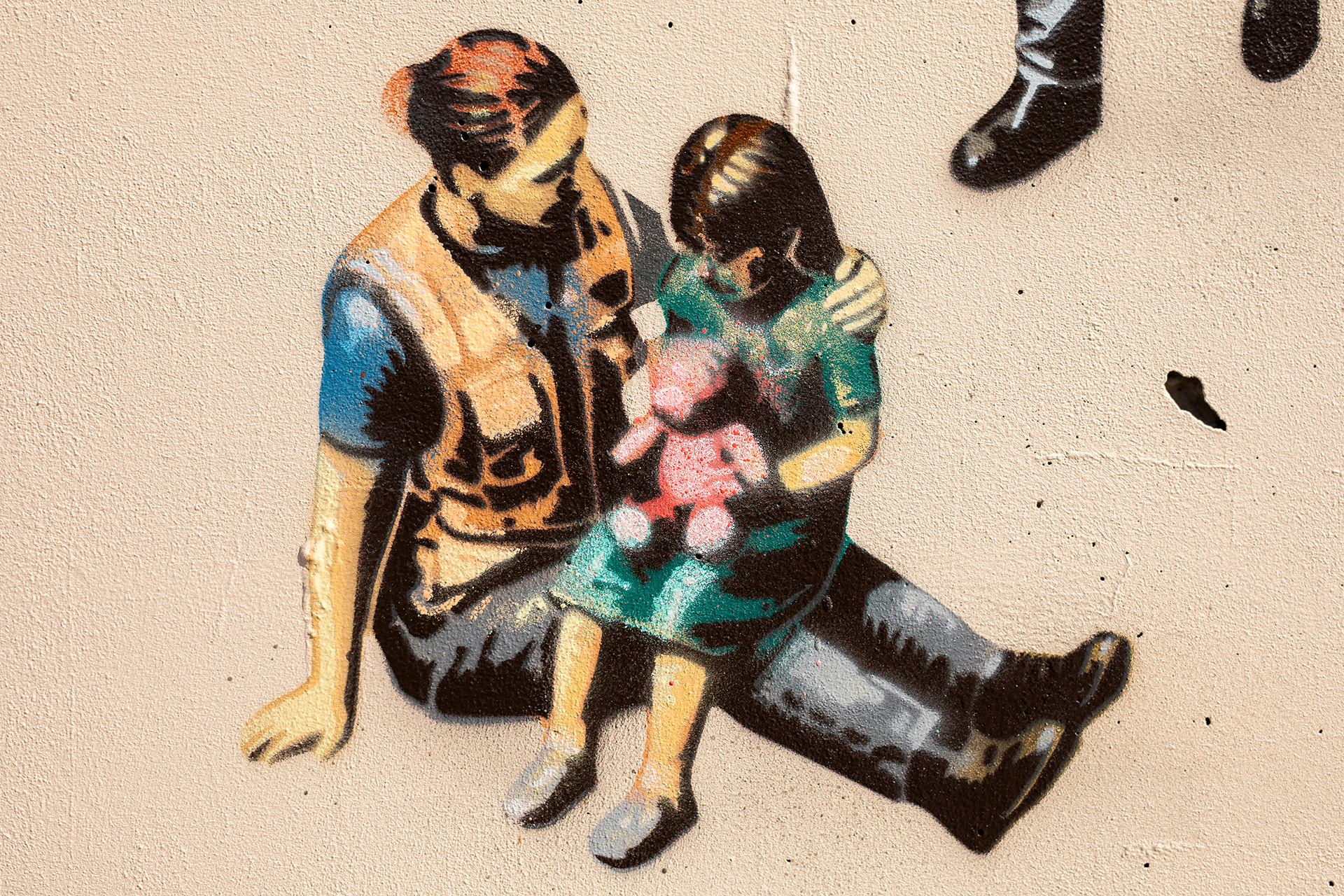
Below it, figures providing assistance (Médecins Sans Frontières, Red cross, UN humanitarian workers), an emergency vehicle and a medical tent emphasize the human dimension of humanitarian aid. Created in Geneva for Médecins Sans Frontières and Hôpitaux Universitaires de Genève, the artwork visually addresses the protection of healthcare and humanitarian workers in armed conflicts, contrasting care and collective responsibility with the fragility of political and legal protection.
The mural was painted directly on the main wall of the Parc des Chaumettes using outdoor acrylic paints, mainly applied with brushes and rollers, and stencils, using spray paints.